Existential Risks (and Hopes): Towards a Prosperous and Fair Society – Insights from the Better Futures Programme Theme Dinner
18 March 2026 · Downing College, Cambridge
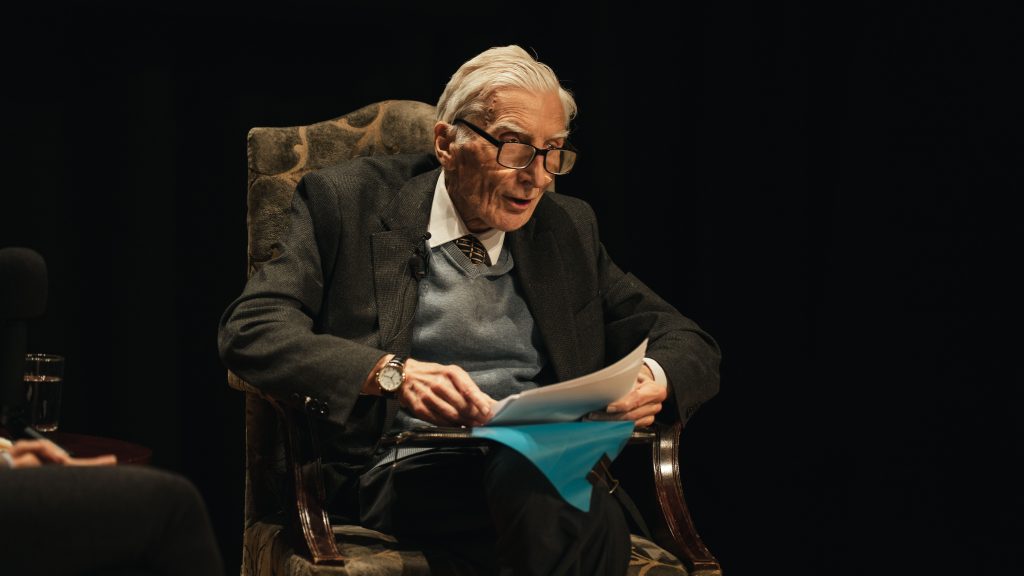
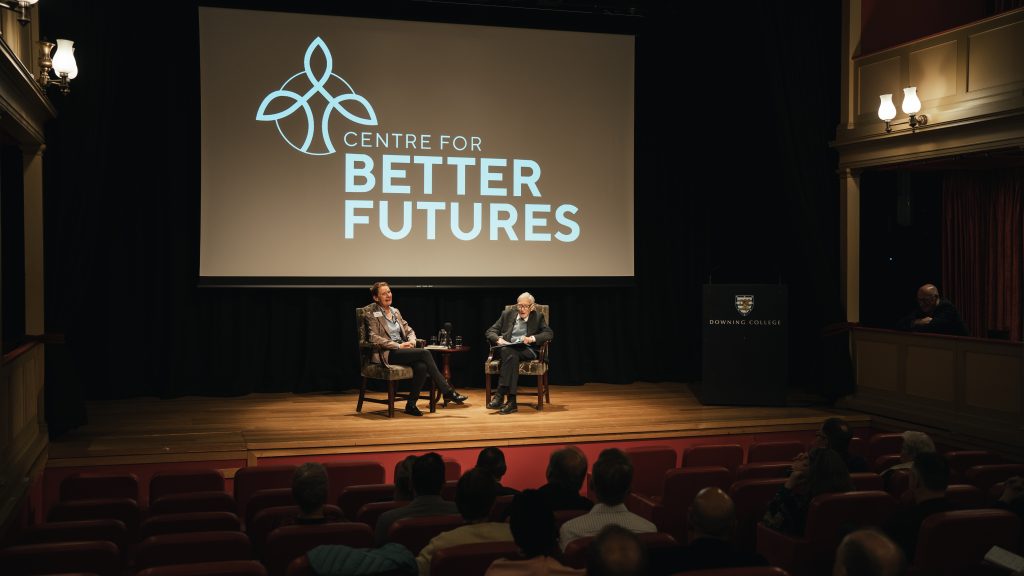
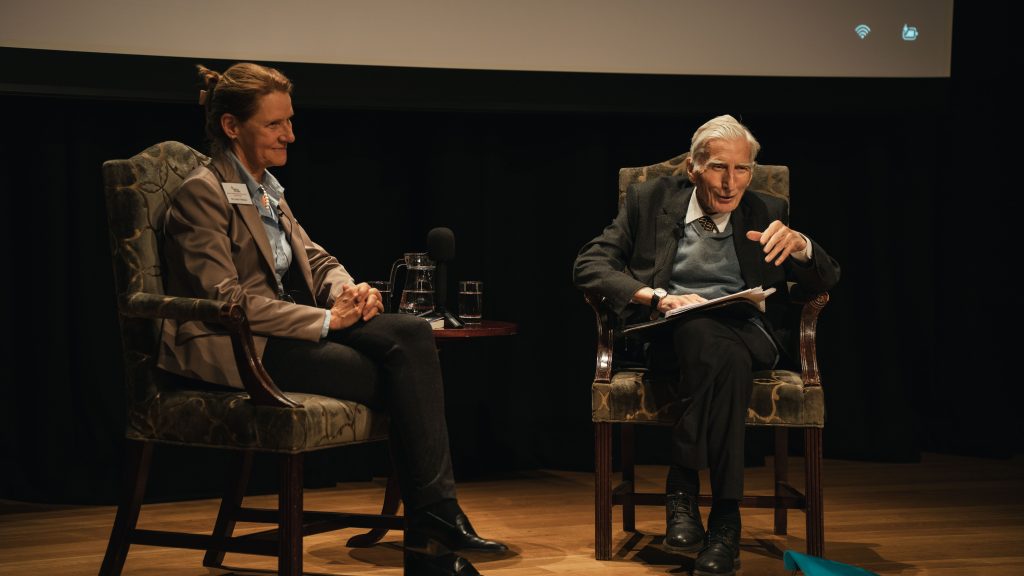
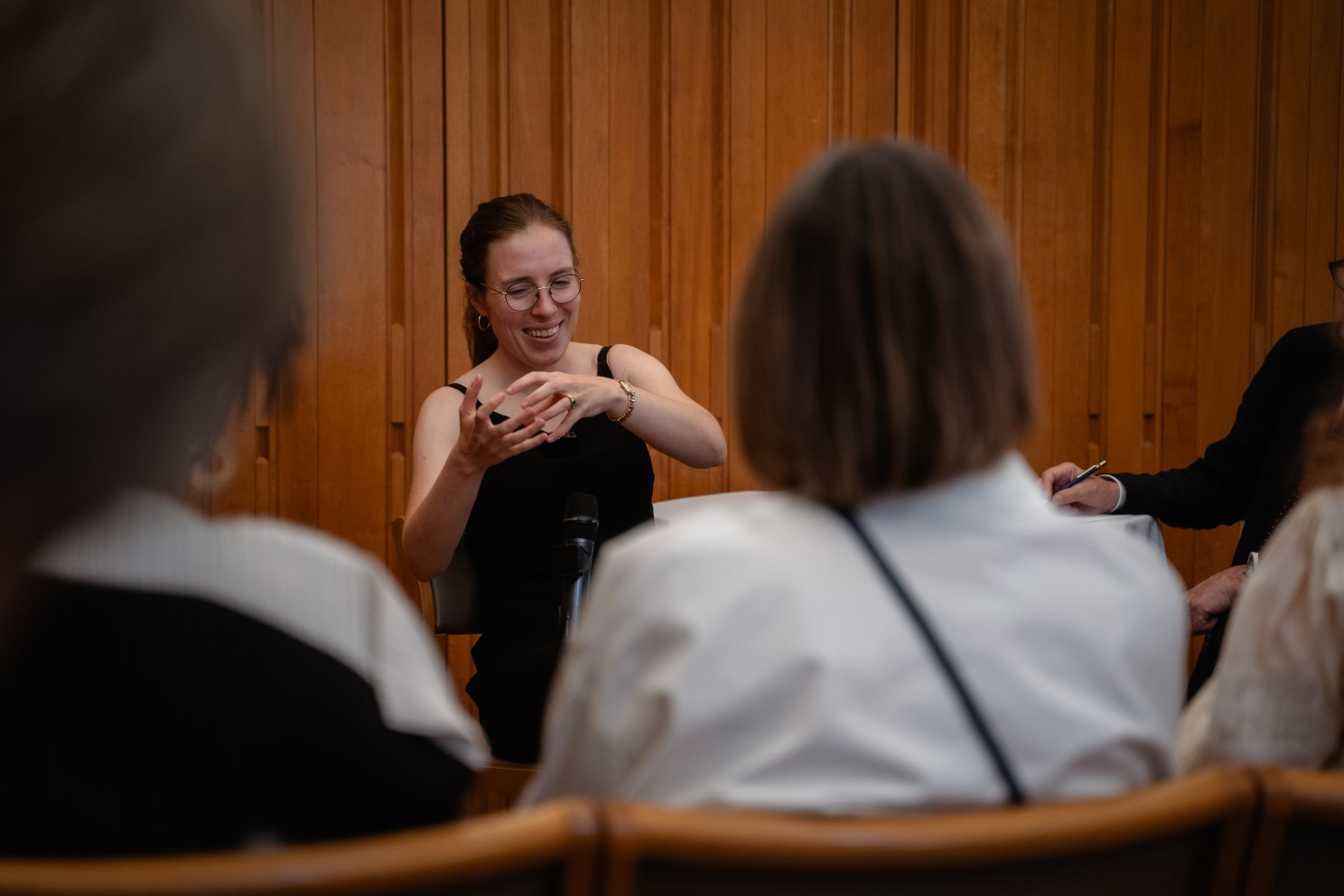
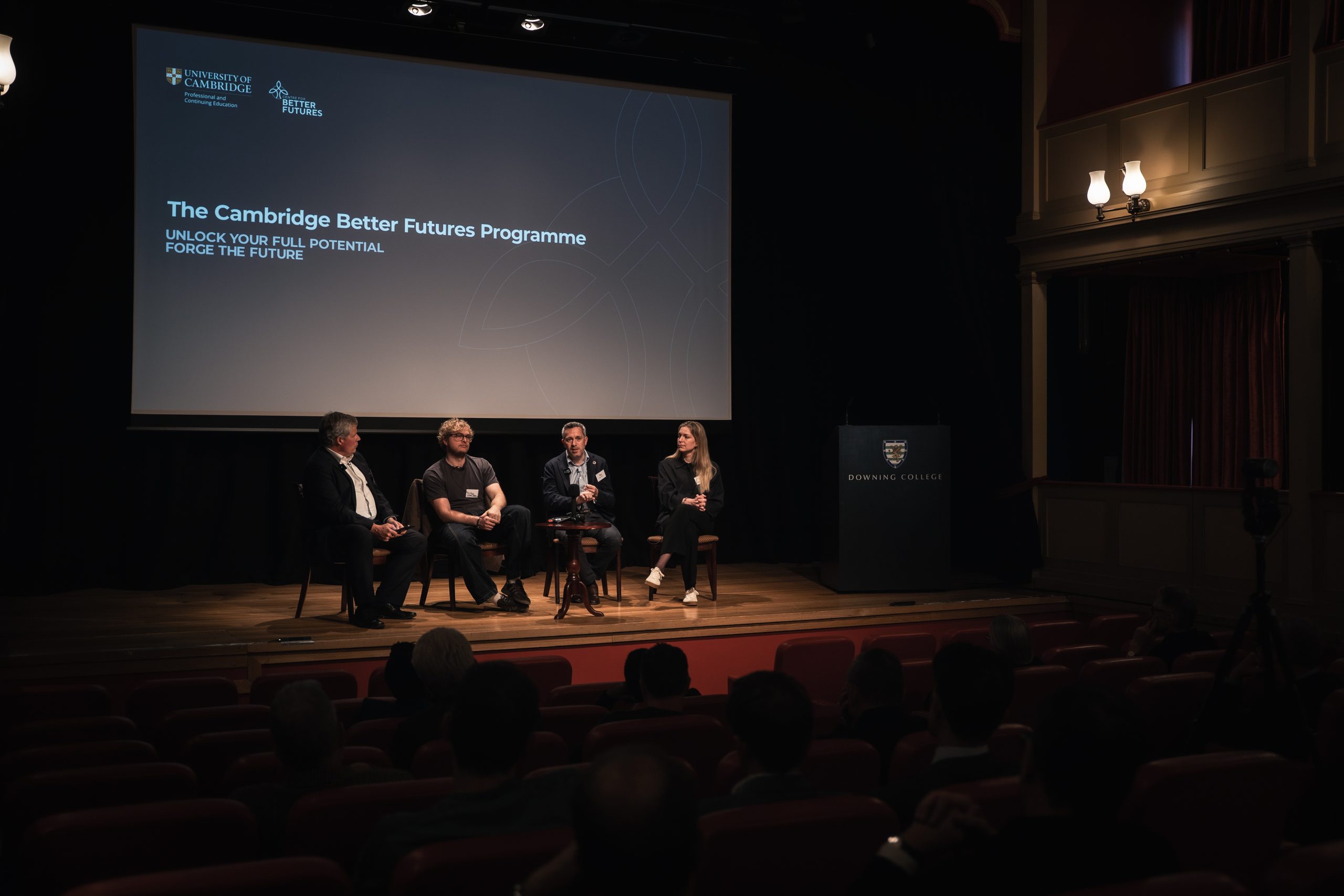
The sixth Better Futures Programme Theme Dinner brought together Better Futures Leaders, students, and esteemed guests to discuss a pressing question of our time: how do we navigate the existential risks of the 21st century and what grounds for hope remain? Our evening’s distinguished speaker was Lord Martin Rees (Lord Rees of Ludlow, Astronomer Royal, Emeritus Professor of Cosmology and Astrophysics at the University of Cambridge, and co-founder of the Centre for the Study of Existential Risk), and was expertly chaired by Professor Lucia Reisch (El-Erian Professor of Behavioural Economics and Policy, and Deputy Dean of Queens’ College).
In her introduction, Professor Reisch highlighted Lord Martin Rees’ unique standing not only as a scientist of the first order — recipient of the Isaac Newton Medal, the Templeton Prize, and the Order of Merit, and former President of the Royal Society — but as a communicator who has spent decades bringing rigorous thinking about humanity’s future to the widest possible audience.
Lord Rees opened with two predictions he considered reliable even with, in his words, “a cloudy crystal ball”: by 2050, the world will be hotter, and it will be more crowded. Population, currently over 8 billion, is projected to rise to at least 9 billion by mid-century. Beyond that, trajectories diverge sharply. In much of the Global North, birth rates have already fallen well below the replacement level of 2.1 per woman — to around 1 in China and Japan, and 1.5 across most of Europe — raising concerns about ageing populations and an over-dominance of the elderly. In twenty African countries, birth rates exceed four children per woman; if that norm persists, the continent’s population could double again between 2050 and 2100, to 4 billion. Feeding a world of that scale — which will require a further doubling of food production on top of the Green Revolution’s already remarkable gains — demands technological innovation alongside a fundamental shift in the Western diet. The world cannot nourish itself in 2050 while eating as it does today.
“It would be hard to think of a more inspiring challenge for young engineers than devising clean and economical energy systems that can achieve net zero for the entire world.”
Lord Martin Rees
On climate, Lord Rees offered a rare note of cautious optimism. A credible low-carbon path exists, driven by advances in solar energy, storage, and smart transcontinental grids. But the decisive variable is not the Global North’s net-zero ambitions — it is whether clean technologies advance fast enough and cheaply enough for the Global South to leapfrog fossil fuels entirely, just as those nations leapfrogged landlines for mobile networks. A fully decarbonised Europe, he reminded the room, changes very little if the South burns more fossil fuels to reach acceptable living standards.
Lord Rees was candid that the coming decades will be, in his own words, “a bumpy ride” — and he was precise about why. He was clear about the culprits: engineered pandemics, which Lord Rees named as his “number one fear”; the heightened risks of nuclear conflict among nine nuclear-armed states; and the deeply ambivalent force of artificial intelligence. Where AI promises to supplement medicine, law, and public administration, it equally enables algorithmic decision-making that is neither transparent nor contestable. The more immediate danger, he argued, may not be a rogue superintelligence but a society grown so dependent on globe-spanning systems that it is undone by their breakdowns. The redistribution question is equally urgent — AI generates extraordinary wealth for innovators and megacorporations, wealth that must be taxed and redirected towards the roles technology cannot fill: caring for the old, the young, and the sick.
“Whatever can be done will be done by someone somewhere. And that’s a nightmare.”
Lord Martin Rees
The Q&A sharpened the evening’s central tension: the distance between the scale of global challenges and the reach of individual action. Professor Reisch pressed Lord Rees on what, amid so many risks, still warranted hope. Rees sees knowledge and concern spreading, and mass movements have shifted political will before. His counsel was to build on that: to identify and amplify the charismatic influencers — the Attenboroughs, the Thunbergs — who can move public attitudes at scale.
“Politicians do respond to mass movements… and if we are individual scientists, then I think we have an obligation to try and multiply our impacts, because we only have one vote ourselves.”
Lord Martin Rees
Importantly, Rees stressed that science can describe the terrain but cannot supply the values needed to navigate it. That, he concluded, is the work of citizens, institutions, and the long chain of decisions stretching across generations: “We need to ensure that we are good ancestors — empowered by 21st-century technology, but guided by values that science alone can’t provide.”
The Better Futures Programme extends its thanks to Downing College and Master Professor Graham Virgo for generously hosting the evening, Professor Lucia Reisch for expertly chairing the fantastic discussion, and to Lord Martin Rees for a remarkable evening of reflection, challenge, and carefully reasoned hope.