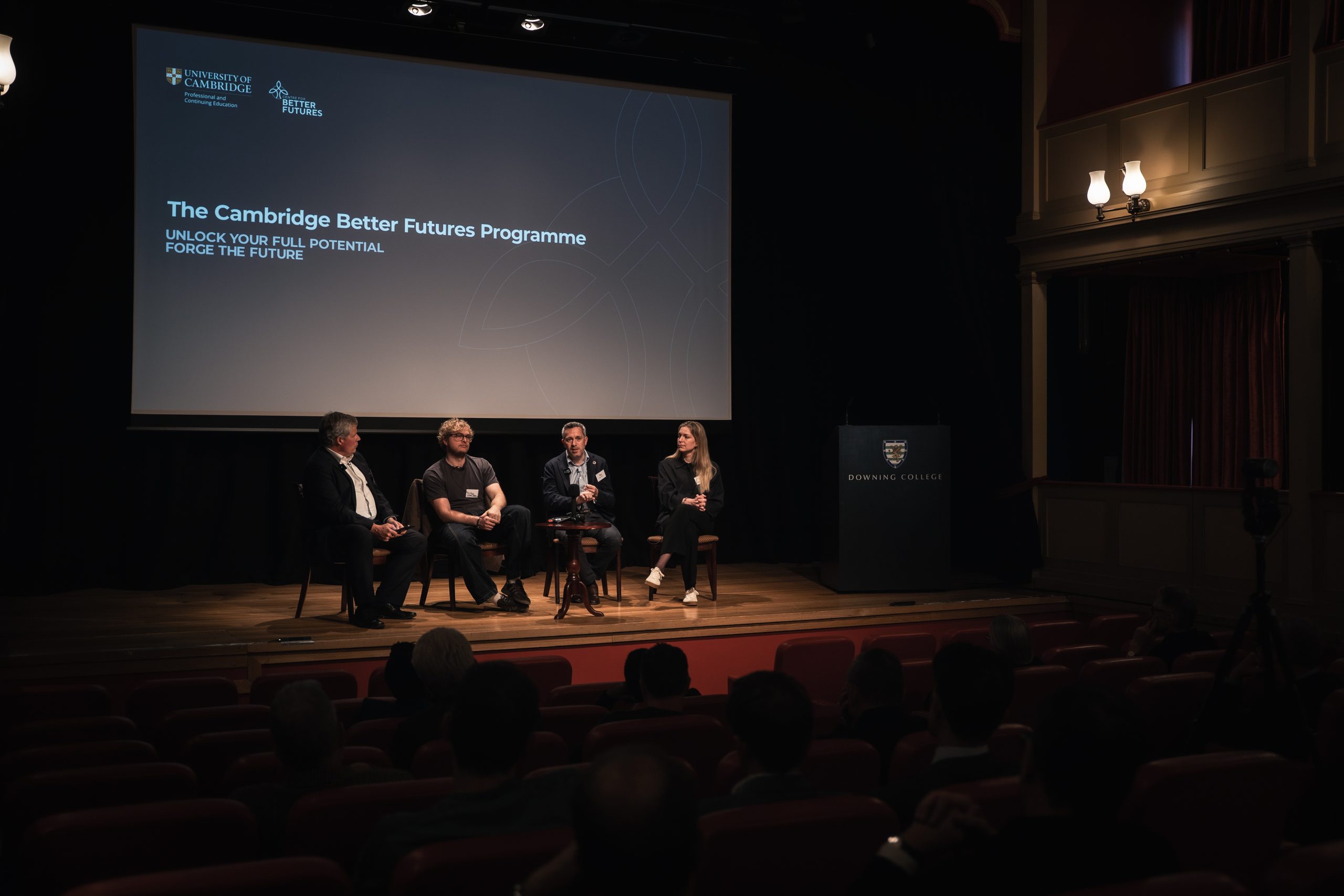
12 May 2026 · Downing College, Cambridge
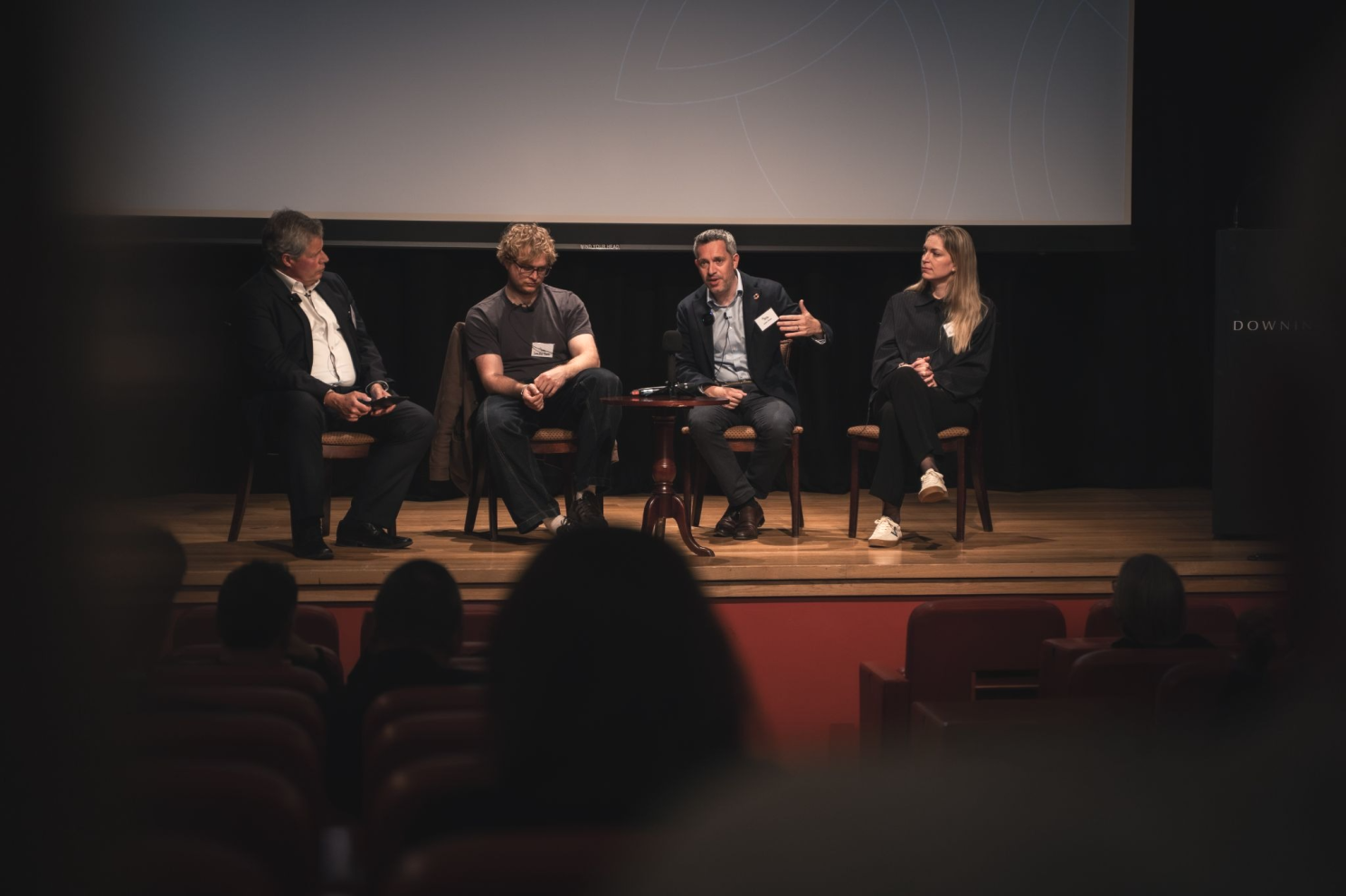
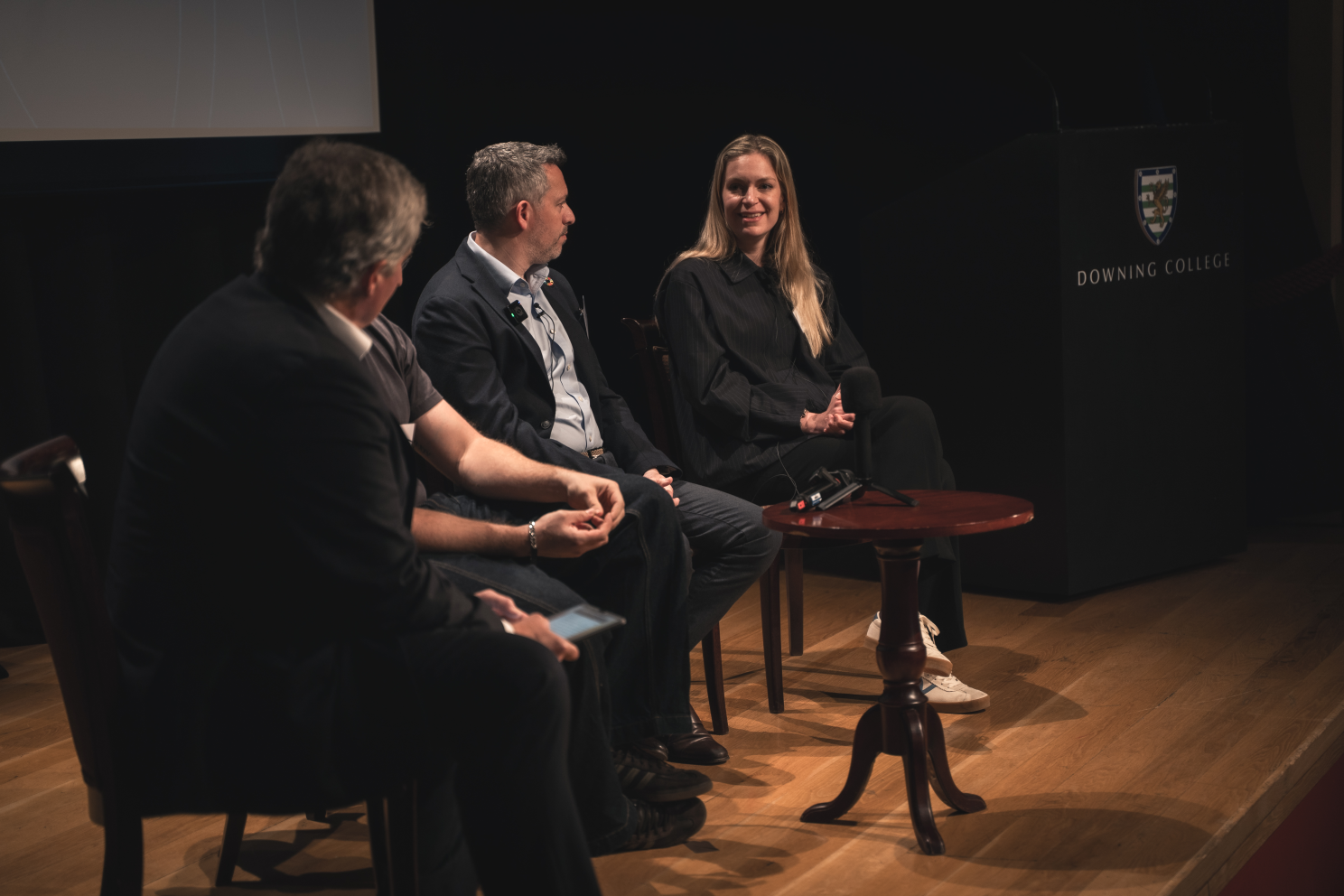
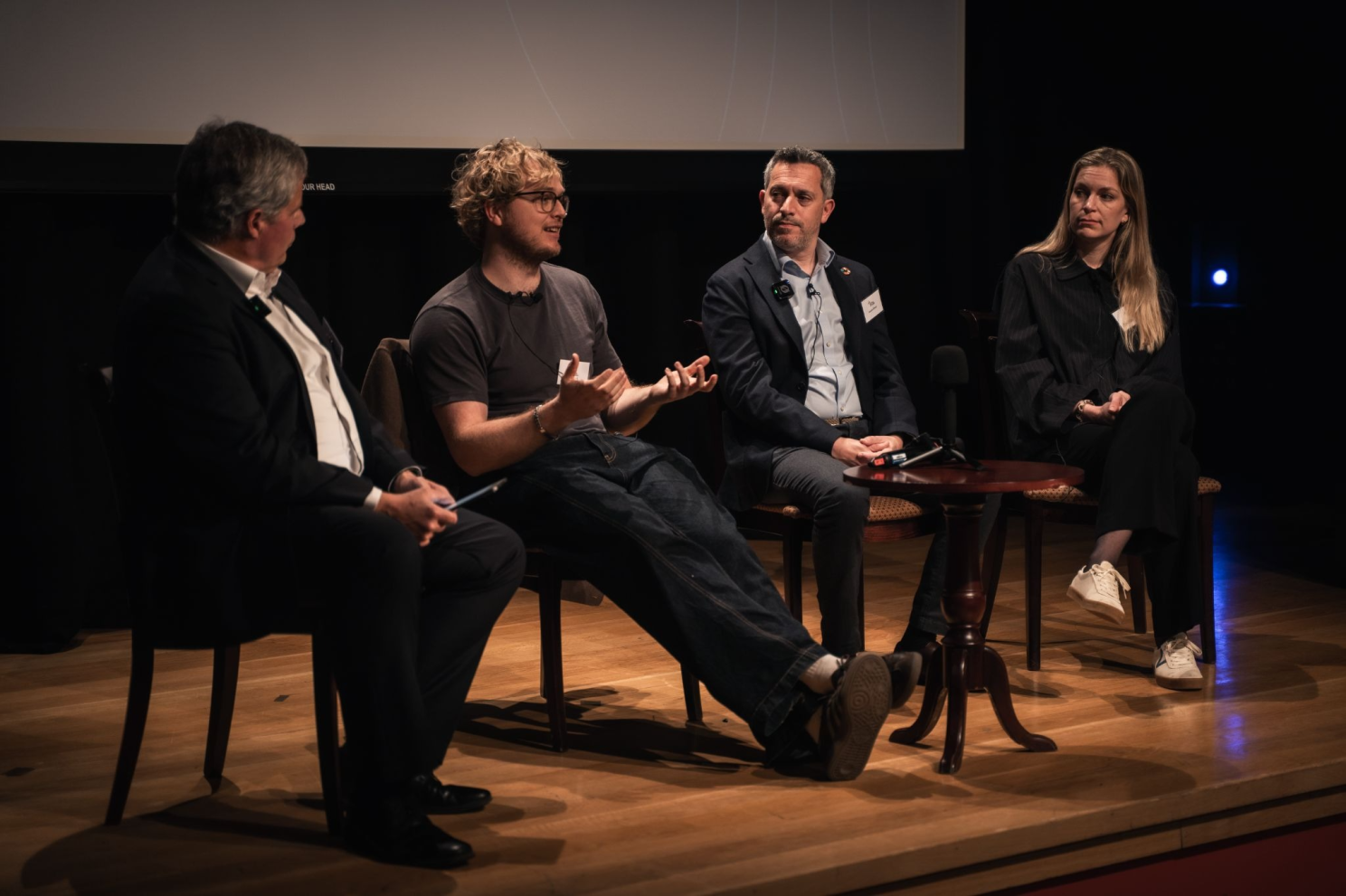
The University of Cambridge Better Futures Programme returned to Downing College Cambridge for an evening exploring the rapid rise of artificial intelligence and what it means for the future of people and the planet. The discussion was chaired by Julian Critchlow , Advisory Partner at Bain & Company and former Director General for Energy Transformation and Clean Growth, who has spent his career at the intersection of energy infrastructure and the clean energy transition. He was joined by three panellists with deep experience across the investment and technology landscape: Adam Elman , Director of Sustainability for Google EMEA, where he leads the company’s efforts to operate responsibly and deploy AI for environmental benefit; Madelene Larsson , Partner and Head of Climate & Deeptech at Giant Ventures, who invests in entrepreneurs driven by purpose and relentless ambition to advance humanity, and Sebastian Hunte , Investment Director at AlbionVC, where he focuses on deeptech spanning machine learning, cleantech, and quantum computing.
The energy question
Julian set the scene with a striking set of numbers. AI’s demand for computing power is growing at an extraordinary rate, and that means an extraordinary demand for electricity. Data centres, grid infrastructure, and the energy to power it all are becoming as important to the AI story as the technology itself.
“AI is doing two things simultaneously: creating the biggest demand shock we’ve seen in a generation, and offering tools to manage it that we’ve never had before.” – Julian Critchlow
Adam offered some perspective. Data centres currently account for around 1.5% of global electricity use. AI is only a fraction of that — and the figure, while growing, is often overstated in the headlines. The bigger challenge, he argued, is not the scale of AI’s energy use but whether that energy can be clean. Google has committed to running on 24/7 carbon-free energy by 2030 — meaning clean power matched hour by hour, not just offset annually — and is investing in everything from solar and wind to geothermal, small modular nuclear reactors, and fusion.
“If we are the only people that are 24-7 carbon-free in 2030, we’ve failed — because we’re trying to solve for the planet.” – Adam Elman
Sebastian added that while efficiency gains in AI hardware are real and significant, as AI becomes cheaper and more accessible, demand will keep growing to fill whatever headroom is created. The goal has to be clean supply, not reduced consumption.
AI as a tool for sustainability
One of the most compelling parts of the evening was the range of examples already happening in the real world. Google has shown it is possible to predict when contrails will form and reroute flights to avoid them — reducing their occurrence by 62% at no extra cost. AI-powered flood forecasting now predicts riverine flooding seven days in advance across 150 countries, giving communities and aid agencies time to prepare.
“Aid agencies are now giving aid in advance so people can get out. These are things that are literally saving lives and livelihoods — and that’s happening today.” – Adam Elman
Industrial efficiency was another area of excitement for Madelene — from AI-designed materials to smarter manufacturing processes, there is huge potential to reduce waste and energy use in sectors that have changed very little for decades. Even within AI infrastructure itself, as Sebastian elaborated, new photonic networking approaches can cut data centre energy use by over 80% — the technology, in other words, is increasingly being used to improve itself.
Who benefits and who doesn’t?
The conversation shifted in the second half to a question the panel clearly felt more conflicted about: whether the benefits of AI will be shared widely, or whether they will deepen existing inequalities.
Sebastian, who advises the Barbados government on AI policy, spoke candidly about the risk that AI amplifies the advantages already held by wealthier nations, better-funded institutions, and more privileged individuals. Closer to home, Madelene argued that AI-driven hiring tools and the noise of an increasingly automated job market would push employers towards the safest, most legible signals — the well-known university, the prestigious employer — narrowing the routes into professional life for people without those advantages.
“We need to carefully think about how AI can be accessible to everyone already at this stage.” – Madelene Larsson
But there is a more hopeful parallel too, as Adam pointed out. Many parts of the world that lack legacy infrastructure — old grids, established systems — are actually better placed to adopt new, cleaner approaches from scratch, just as they leapfrogged landlines for mobile phones. Sebastian, drawing on his work advising the Barbados government, saw the same opportunity for smaller, more agile countries to use their legislative flexibility to become early testing grounds for new technologies. The opportunity is real; the question is whether the right partnerships exist to make it happen.
Hopes and fears
The audience asked the panel what excited and worried them most. On the optimistic side, the examples were concrete and immediate — AlphaFold winning Nobel Prizes for drug discovery, flood warnings saving lives in 150 countries today, and the prospect of solving material and energy challenges that felt like pipe dreams a decade ago. Julian’s worry was the one that cut across all of it: that the genuine benefits get drowned out by alarming headlines before the technology has a chance to prove itself. The shared concern, however, was equity — all three panellists returned to the same fear that AI would widen the gap between those with access to opportunity and those without, faster than societies have time to respond.
What needs to change
Each panellist was asked for one change — a policy, an investment, a commitment — that would most improve AI’s chances of being genuinely net positive.
Sebastian urged Europe and the UK to be bolder: to back AI at scale, act as early adopters, and resist the temptation to regulate first and invest later. The cost of falling behind, he argued, is higher than it looks.
“The worst thing you can do is not go all out after it — AI is one of our last chances to have a reasonable shot at addressing climate change.” Sebastian Hunte
Adam called for a serious push on clean energy infrastructure and on making data more openly available. Too many valuable data sets sit locked away, he argued, for no good reason — and AI is only as useful as the data it can access.
Madelene echoed the call for investment in new energy sources, and added a practical point: businesses across Europe — large and small — need to be more willing to actually use AI tools, not just talk about them. Adoption drives investment, which drives accessibility.
The evening was a reminder that the technology itself is not the hardest part — the harder questions are about choices, priorities, and who gets to benefit. A warm thank you to Downing College Cambridge and Master Prof Graham Virgo for generously hosting the evening, to Julian Critchlow for expertly chairing the discussion, and to our panellists Adam Elman, Madelene Larsson, and Sebastian Hunte , and for a thought-provoking and wide-ranging conversation.
The University of Cambridge Better Futures Programme is a highly personalised six- or twelve-month programme at the University of Cambridge, designed for accomplished leaders exploring the next phase of their impact. Key information as follows:
- You work with an academic mentor to create a bespoke selection of courses that are relevant to you – drawn from undergraduate, postgraduate, and continuing education options across Cambridge.
- You are hosted at a Cambridge college, with bespoke tuition (one-to-one supervisions).
- You take part in a core programme with your cohort of accomplished peers, designed to help you focus your time on a project of both personal and societal benefit
- Discounts available to partners taking the programme together
Applications for the next intake, starting September 2026, are currently closed. We may consider late applications on a case-by-case basis. Learn more and register your interest at our website.