Improving Lives, Improving Care – Insights from the Better Futures Programme Theme Dinner
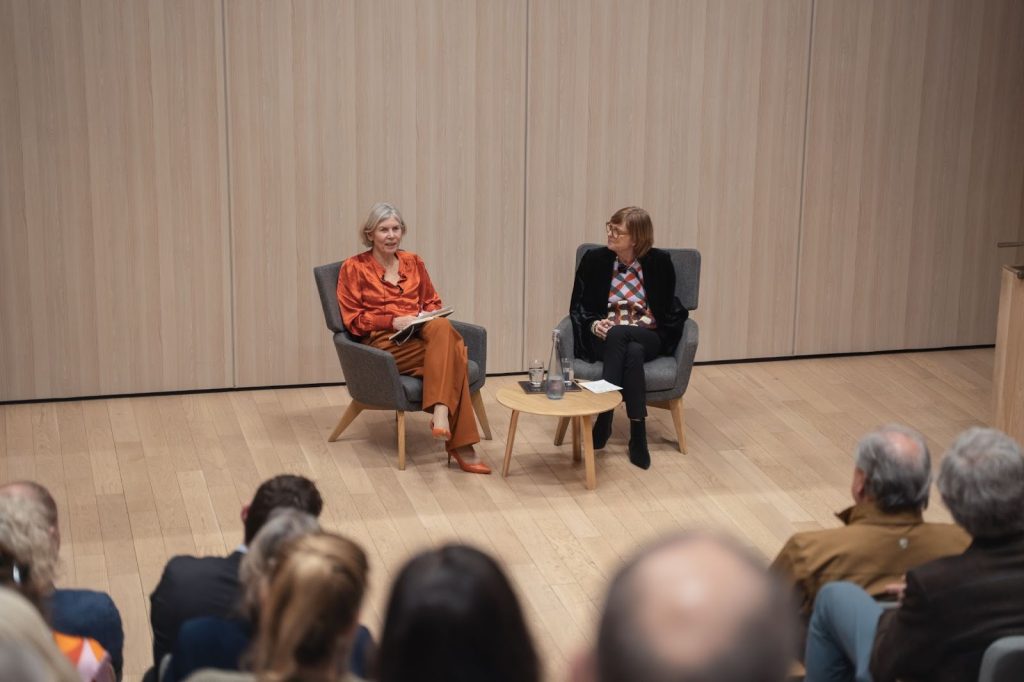
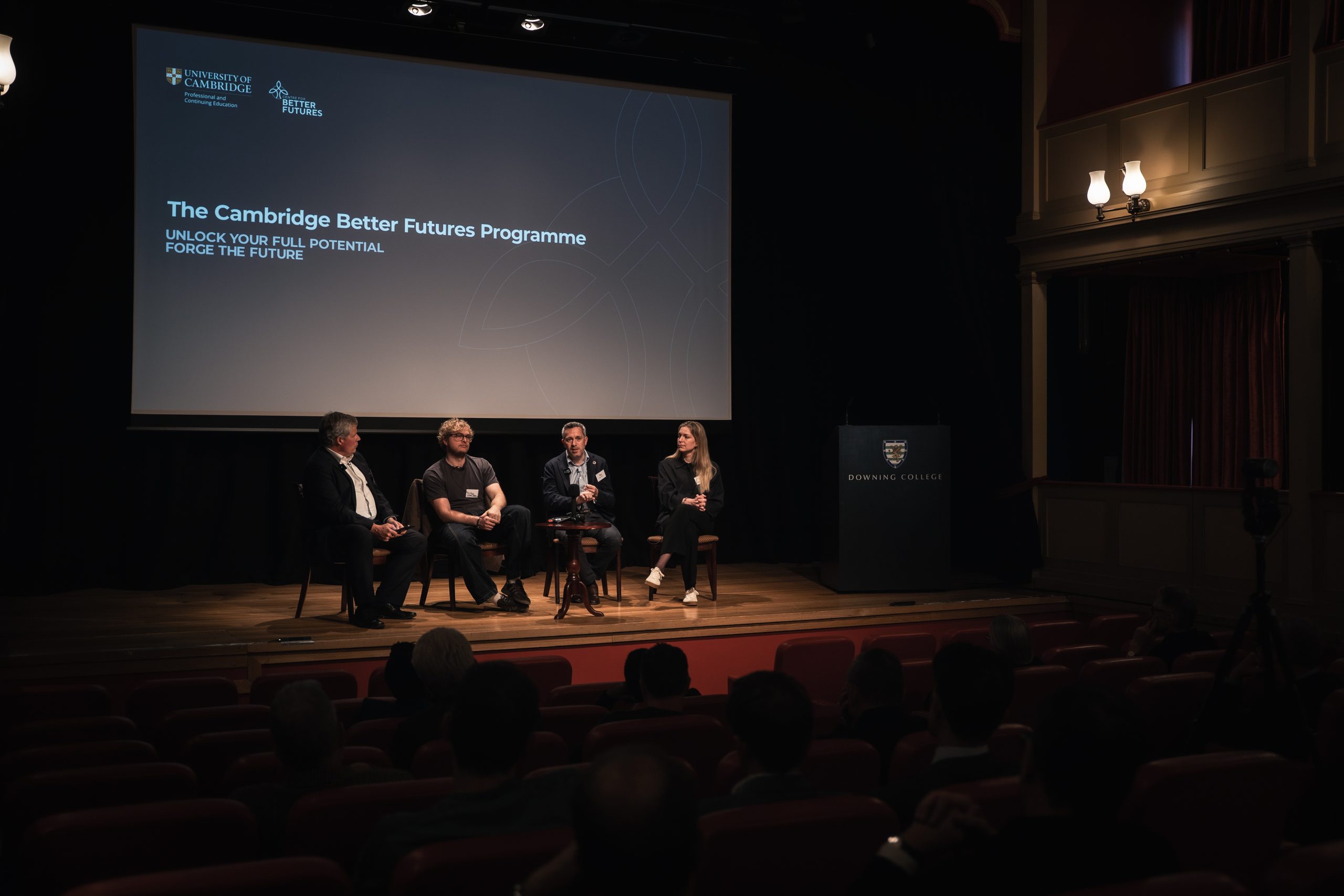
The Cambridge Better Futures Programme recently welcomed Dr Penny Dash, Chair of NHS England, and Pam Garside, Co-Chair of the Cambridge Health Network, for a fantastic discussion on why health systems struggle to improve even when the answers are, in many ways, already on the table. The session was expertly hosted by Dr Julian Huppert, Director of the Intellectual Forum at Jesus College, Cambridge, and welcomed an engaging audience of Better Futures Leaders as well as members of the Cambridge community.
Why redesign at all?
A central thread in the discussion was the gap between input and impact. Health spending has risen to significant shares of GDP in many countries, yet gains in life expectancy, quality of life and access often lag behind what that investment might suggest. Some people receive excellent care and outcomes, but overall provision is patchy, and even comparatively egalitarian systems struggle to provide consistently high‑quality care for everyone.
“We’re putting all this money in and we’re not really getting what we need out.”
Penny stressed that this is not a uniquely English problem. “There is no best health system in the world,” she argued. “There are really great bits of many health systems, but no one has got it completely right” – meaning that questions of value, access and sustainability are being grappled with in every system, not just the NHS.
Two dimensions of value were defined. One is whether systems deliver the health outcomes and life expectancy one would expect for the money going in. The other is whether they provide what people experience as important in the “here and now”, particularly timely access to care, which does not always align with long‑term outcome metrics. On both fronts there is a case for redesign.
Crucially, as Penny noted, the challenge is not a shortage of ideas. Decades of research and data have clarified what effective systems do: invest in primary prevention (notably around smoking and obesity), strengthen primary and community care for people with long‑term conditions and frailty so fewer end up in hospital, and tackle everyday inefficiencies in prescriptions, referrals and appointments that frustrate patients and staff alike. Hospital care can cost between two and five times as much as primary and community care, making earlier, better‑coordinated support both clinically and economically attractive.
Why is it so hard?
If the broad direction of travel is clear, what makes progress so difficult?
A recurring theme was that consensus is often easier to reach than decisions are to make. Modern health systems rightly listen to patients, communities and professionals. But when every change has to satisfy every preference – from how services are described to where they are located – clear strategies can dissolve into long wish‑lists. It becomes hard to say “this is the model we are going to build now”, even when there is broad agreement on the overall direction.
The difficulty then is that everyone feels the pain, but no one owns the trade-offs. Clinicians, managers, patients and politicians all see problems in the current system, yet when concrete changes are proposed – moving a service, changing roles, using technology differently – it often becomes someone’s loss: a longer commute, a new way of working, a different way of accessing care. As one speaker put it, many people can “set out fairly consistently these are the things that we should do” but committing to them, and sticking with them, is much harder.
Finally, healthcare systems are still designed and incentivised to add, not to stop. For years, the instinct has been to respond to pressure by adding more – more staff, more services, more projects. It is much harder to stop low‑value activity or redesign roles around prevention and smarter ways of working. In England, for example, workforce numbers have been rising by around 4% a year, far faster than demographic pressures from population growth and ageing alone. This suggests that simply adding capacity cannot be the long-term answer.
Taken together, these frictions mean that even when there is broad consensus on what works, systems struggle to turn it into consistent, sustained change.
“If it was easy to do, someone would have done it.”
Hope for the future
Several forces are now converging in ways that may make “business as usual” increasingly untenable — but also open the door to doing things differently.
One is simple affordability: on current trends, health and care would absorb an ever‑larger share of national resources and the workforce. That creates pressure to move away from adding inputs and towards redesigning how care is delivered.
Another is changing expectations. People now experience seamless, technology‑enabled services in many parts of their lives and increasingly expect something closer to that in health care – not as a luxury, but as a basic standard.
Finally, technology itself has moved from being resisted to being actively pulled into the system. Tools such as online consultations, online booking, better use of data and ambient voice documentation are now widely requested by clinicians who believe they can free up time for direct care. Penny saw particular interest in the way digital tools, combined with more human support such as care navigation, could help people move through complex systems more effectively.
“We are at this tipping point where actually people are going be more willing to embrace change, they’re going to embrace the technology and the technology will take us to a better place and a better system.”
Across all three parts of her structure, the thread was consistent. Systems are under pressure, and the gap between what goes in and what comes out is increasingly visible. At the same time, there is substantial knowledge about what works and a growing set of tools that could help. The challenge is no longer to discover the right answers in principle, but to find ways of acting on them in practice.
A huge thank you to Jesus College and Dr Sonita Alleyne, Master of Jesus, for hosting such a thoughtful and engaging event, to Dr Julian Huppert for chairing the discussion, our Better Futures Leaders, and to our speakers Dr Penny Dash and Pam Garside for sharing their time and insights.
The University of Cambridge Better Futures Programme is a highly personalised six- or twelve-month programme at the University of Cambridge, designed for accomplished leaders exploring the next phase of their impact. Key information as follows:
You work with an academic mentor to create a bespoke selection of courses that are relevant to you – drawn from undergraduate, postgraduate, and continuing education options across Cambridge.
You are hosted at a Cambridge college, with bespoke tuition (one-to-one supervisions).
You take part in a core programme with your cohort of accomplished peers, designed to help you focus your time on a project of both personal and societal benefit
Discounts available to partners taking the programme together
Applications are now open for the 2026/27 cohort, commencing September 2026.